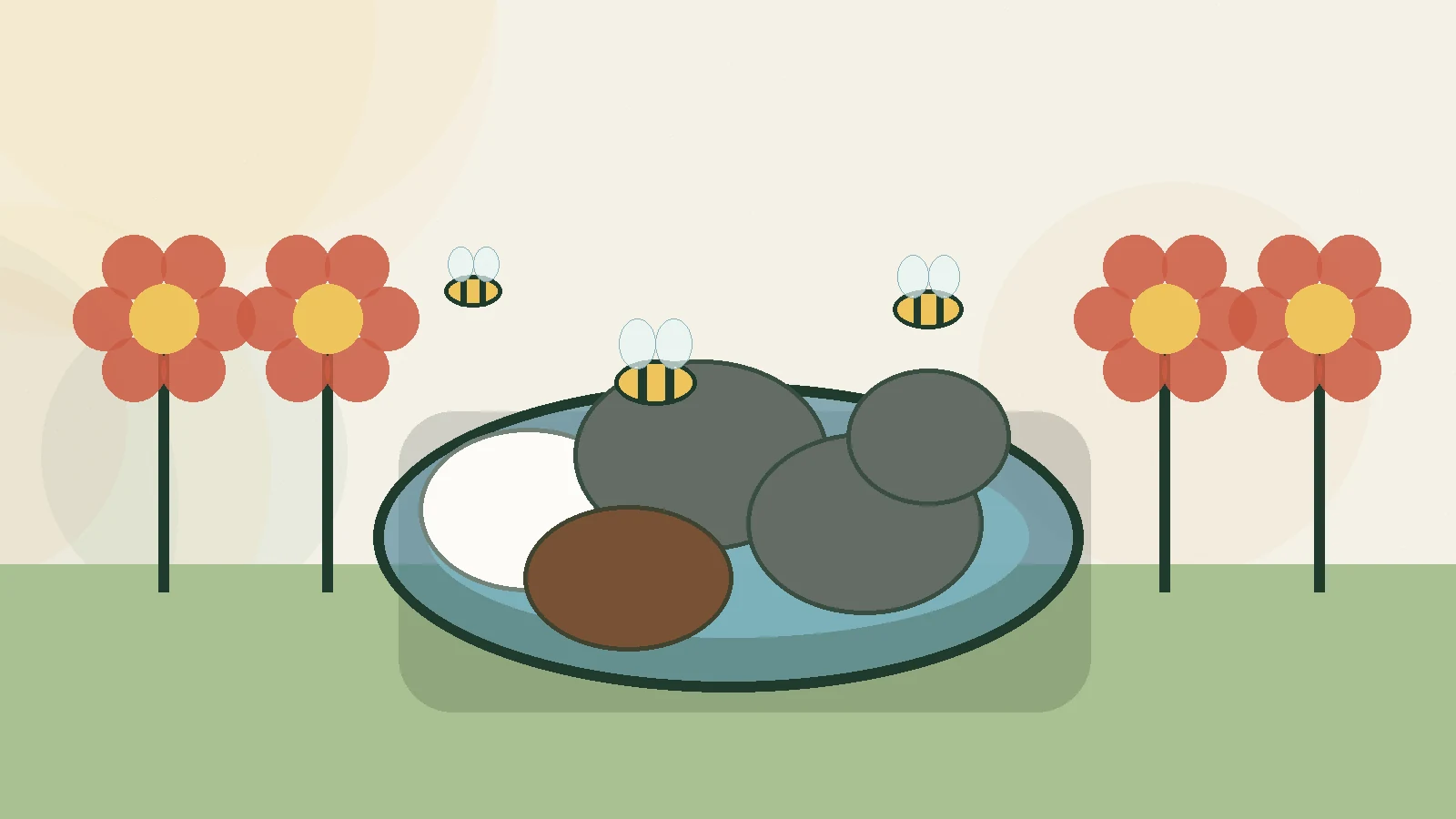
A bee watering station is one of the rare garden projects that can be completed before the enthusiasm for the project wears off.
You need a shallow dish, several stones, and water. The stones are not decoration. They give small insects dry, stable places to land and drink without falling into deep open water.
The goal is a damp edge and shallow access — not a miniature birdbath with bees hoping for lifeguards.
What to use
Look around before buying anything.
- A plant saucer
- A shallow bowl
- A pie pan
- A lid from a wide container
- Flat stones, pebbles, corks, or short pieces of untreated wood
Choose a container that is easy to empty and scrub. A beautiful heavy pot you will never clean is less useful than an ordinary saucer you can rinse in thirty seconds.
How to set it up
- Rinse the dish and stones with plain water.
- Arrange the stones so several surfaces sit above the future waterline.
- Add a shallow layer of water.
- Make sure the tops of multiple stones remain dry.
- Place the dish near flowers or nesting habitat where you can see and maintain it.
The Xerces Society recommends shallow, unpolluted water with landing surfaces for bees and wasps. A simple dish can reduce the distance they travel to find water and reduce exposure to polluted puddles.
Put it somewhere useful
Choose a stable spot protected from pets, foot traffic, strong wind, and lawn chemicals.
Morning sun with some afternoon shade can slow evaporation and prevent the dish from becoming extremely hot. Near flowering plants is useful because pollinators already visit the area.
A balcony or patio works too. You do not need a large garden.
Keep the water shallow and fresh
Top it up as water evaporates, but empty and refresh it regularly. In hot weather, a small dish can collect debris or become mosquito habitat if it sits neglected.
The easiest rule is to make it part of another routine: refresh the dish when you water nearby containers. Scrub away heavy algae or slime with a brush reserved for outdoor use, then rinse well.
Do not add pesticide, mosquito treatment, essential oils, or cleaner to the water.
Skip sugar and honey
This is a water station, not a feeding station.
Sugar water can attract large numbers of insects, encourage crowding, spoil, and create a sticky mess. Honey can carry pathogens that are a concern for bees. Clean water is enough.
Flowering plants provide the food. The dish provides water.
The bigger pollinator moves
A watering station is helpful, but it is not the main thing pollinators need.
The larger actions are:
- Planting a variety of locally appropriate flowers that bloom across seasons
- Including native plants
- Reducing or eliminating insecticide use
- Leaving some bare soil for ground-nesting bees
- Leaving stems, logs, leaves, and other nesting material where safe
- Avoiding perfectly sterile landscaping
Start with Native Plants 101 if you want the habitat part to do more than the dish.
Water the habitat without wasting water
Pollinator plants still need sensible irrigation, especially while establishing. Water the garden less often and more usefully: check the soil, water deeply in the morning, and mulch bare ground.
A shallow insect dish needs only a small amount. Do not keep a hose running to maintain it.
Watch before you improve it
Give the station time. Native bees, wasps, butterflies, and other insects may use it differently or not immediately.
Do not keep adding sugar, color, scent, or decorative glass because nothing arrived in the first hour. The project works by being a quiet, reliable source of water, not by advertising itself.
If birds repeatedly empty it, that is not a failure. Put out a separate, deeper birdbath and keep the insect dish shallow.
Good enough, not perfect
Use a saucer you already own. Add stones that rise above a shallow waterline. Refresh it as part of your normal garden routine. Then spend the real effort on native flowers and fewer pesticides.
The bees do not need a boutique spa. They need a safe edge to stand on.