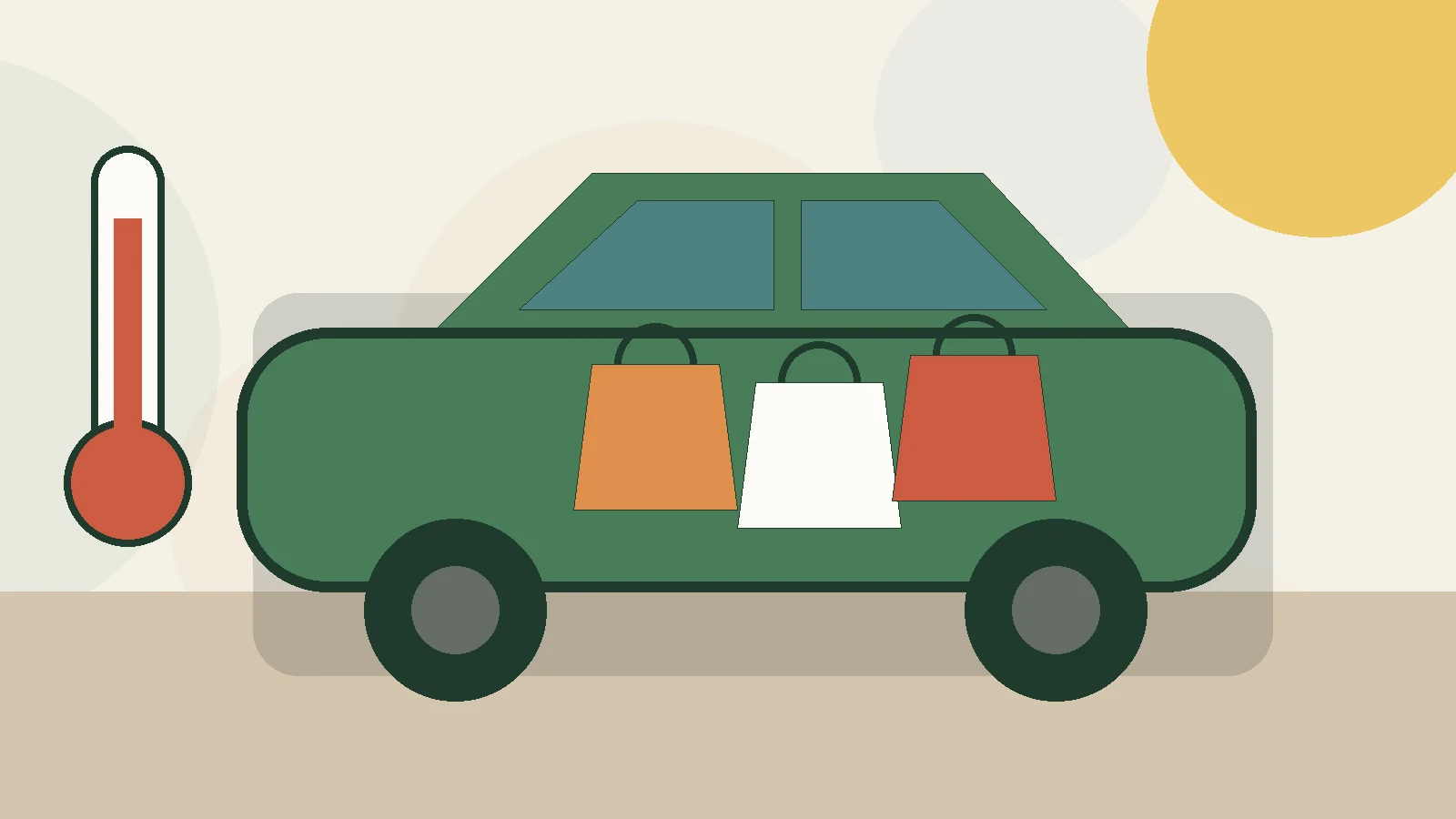
The most expensive part of a grocery trip can happen after checkout.
Milk, meat, eggs, seafood, cut fruit, frozen food, and leftovers go into a hot car. Then comes the pharmacy, the hardware store, the school pickup, and one “quick” stop that takes forty minutes.
In ordinary conditions, perishable food should not remain unrefrigerated for more than two hours. When the temperature is above 90°F, the limit is one hour. A parked car can become much hotter than the outdoor temperature, so the clock is not generous.
Food that spoils on the drive home is both a safety problem and a completely avoidable form of food waste.
Make groceries the last stop
Do errands first. Buy food last. Go home after checkout.
This one scheduling choice does more than any special bag because it removes the time problem instead of trying to insulate your way through it.
If you use curbside pickup, choose a window when you can drive home immediately. If groceries are delivered, arrange for someone to bring perishables inside rather than leaving them on a porch.
Shop the cold sections last
Walk the store in this order when practical:
- Shelf-stable food
- Produce
- Refrigerated food
- Meat and seafood
- Frozen food
The frozen peas should not be thawing in the cart while you compare fifteen kinds of pasta sauce.
Keep raw meat and seafood in separate bags so leaks cannot reach produce or ready-to-eat food.
Bring a cooler without turning it into gear
A cooler or insulated bag helps, especially for a longer drive. Use ice packs, a bag of ice, or frozen water bottles.
You do not need to buy a premium grocery system. A basic cooler you already own is enough. A cardboard box inside the cooler can keep bags upright and separate.
Put the most temperature-sensitive food closest to the cold source. Keep the cooler closed. Place it in the shaded passenger area rather than an enclosed trunk when possible, and run the car’s air conditioning if conditions require it.
The cold-bag shortcut
At checkout, group all refrigerator and freezer food together. When you reach home, carry that bag inside first and put it away before unloading paper towels, canned food, or anything else that can wait.
This also makes the refrigerator reset easier because everything cold arrives in one batch.
What if the trip takes longer than planned?
Time and temperature both matter.
If perishables have remained at 40°F or below in a properly iced cooler, the outdoor one-hour rule is not the same concern. An inexpensive appliance thermometer can tell you whether the cooler is actually staying cold.
If food sat warm in a hot car beyond the safe window, smell and appearance cannot reliably tell you whether it is safe. Do not taste it to test it.
The painful answer may be to discard it. The greener lesson is to change the transport plan next time, not to turn food poisoning into an anti-waste practice.
Unpack before reorganizing
Get cold food into the refrigerator and freezer quickly. You can reorganize the pantry later.
Then use two habits that prevent the next stage of waste:
- Put older food toward the front.
- Move anything that needs quick attention into the eat-me-first area.
If the grocery trip produced more fresh food than the week can hold, adjust the next plan. The ten-minute meal-planning method starts by checking what is already in the kitchen before adding more.
A hot-day grocery kit that costs almost nothing
Keep these in the car or near the door:
- One insulated bag or small cooler
- Two frozen water bottles
- A clean reusable bag for separating raw meat
- A written reminder: FOOD LAST, HOME NEXT
The frozen bottles become drinking water later. The reminder does most of the work.
The cookout connection
The same time limit applies after food reaches the picnic table. On a day above 90°F, perishable food should be chilled again or discarded after one hour out of temperature control.
The low-waste cookout guide uses small serving batches so the main supply stays cold and usable.
Good enough, not perfect
Buy cold food last. Drive home next. Use a cooler when the trip is not short. Unpack perishables first.
The greenest gallon of milk is not the one in the most recyclable container. It is the one that gets home cold enough to drink.