Meal Planning to Reduce Food Waste
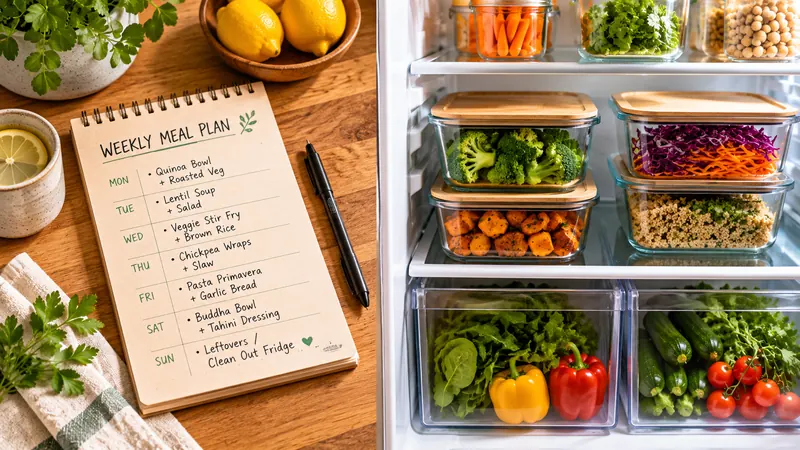
The average American family throws away roughly $1,500 worth of food every year. That's not packaging or bones — it's edible food that went bad before anyone ate it. Lettuce that turned to slime. Leftovers forgotten in the back of the fridge. The "I'll use this" bag of spinach that nobody used.
The fix isn't willpower. It's a 10-minute habit once a week: look at what you have, decide what you'll eat, and buy only what you need. Families who meal plan cut food waste by up to 40% and spend significantly less on groceries.
The 10-Minute Method
This isn't a complicated system. No apps, no color-coded spreadsheets, no Pinterest boards. Just four steps with a notepad before you go shopping.
Check What You Already Have
Open your fridge, freezer, and pantry. What needs to be used up soon? That half-onion, the chicken thighs you froze last week, the can of beans you forgot about. These are the building blocks of your week — not a new grocery list, the stuff already in your house.
Plan 5 Dinners (Not 7)
Leave two nights open for leftovers, takeout, or "fridge surprise" — whatever you can cobble together from what's left. Nobody sticks to a 7-dinner plan. 5 dinners with 2 flex nights is realistic and forgiving. Build dinners around what you found in Step 1.
Write the Grocery List From the Plan
Go dinner by dinner and list only what you don't already have. If Tuesday is pasta and Wednesday is stir-fry, you need pasta sauce and rice — not the whole produce aisle. This is where the savings happen: you stop buying "just in case" items that rot.
Stick to the List
The grocery store is designed to make you buy things you don't need. The list is your shield. If it's not on the list, it doesn't go in the cart. Buy-one-get-one deals on fresh produce are only deals if you'll actually eat both before they go bad.
The Freezer Is Your Best Friend
The single most underused appliance in most kitchens. Almost everything freezes well, and freezing is how you rescue food that's about to go bad. If you won't eat it in 2 days, freeze it today.
Things that freeze surprisingly well: cooked rice, bread (slice it first), shredded cheese, fresh herbs in olive oil (ice cube trays), bananas (peel first — for smoothies), cooked beans, soup/broth, cookie dough, pizza dough, pancake batter, butter, nuts, grated ginger.
Things that don't freeze well: lettuce, cucumbers, raw potatoes (they go mealy), cream-based sauces (they separate), eggs in the shell, soft herbs like basil (freeze in oil instead).
How Long Things Actually Last
Most people throw food out too early because "best by" dates are conservative manufacturer suggestions, not safety deadlines. Here's how long things really last when stored properly:
| Food | Fridge | Freezer | Notes |
|---|---|---|---|
| Eggs | 3–5 weeks past date | Up to 1 year (beaten) | Float test: if it sinks, it's fine |
| Yogurt | 1–2 weeks past date | 1–2 months | Smell it — sour is fine, mold isn't |
| Hard cheese | 3–4 weeks opened | 6+ months | Cut mold off; rest is safe to eat |
| Bread | 5–7 days | 3–6 months | Freeze immediately if you won't finish |
| Cooked rice | 4–6 days | 6 months | Refrigerate within 1 hour of cooking |
| Raw chicken | 1–2 days | 9–12 months | Freeze same day you buy it |
| Ground beef | 1–2 days | 3–4 months | Brown it first to extend fridge life |
| Cooked leftovers | 3–4 days | 2–3 months | Label and date everything |
| Fresh herbs | 7–10 days (in water) | 3+ months (in oil) | Treat like flowers: trim stems, put in water |
| Bananas | Until brown | 2–3 months | Overripe = perfect for smoothies/baking |
💡 The FIFO Rule
First In, First Out. When you put groceries away, move older items to the front and put new items in the back. Restaurants have done this forever — it's the simplest way to make sure nothing gets forgotten and expires in the back of the fridge.
What to Do With Leftovers You're Tired Of
Grain bowls absorb everything. Leftover roasted vegetables, that last serving of chicken, some wilting greens — throw them on rice or quinoa with a drizzle of soy sauce or tahini. It's a new meal.
Soup is a reset button. Almost any combination of vegetables + broth + seasoning = soup. Sauté what you've got, add broth, simmer, blend if you want. Monday's random fridge remains become Tuesday's lunch.
Frittatas hide everything. Beat eggs, throw in whatever vegetables, cheese, or meat you have, and bake at 375°F for 20 minutes. It's the universal leftover disappearer.
Smoothies rescue fruit. Soft strawberries, browning bananas, wilting spinach — none of these are "bad." They're smoothie ingredients. Freeze them in bags and blend when ready.
🌱 The "good enough" note
You don't need to meal plan like a fitness influencer. You don't need matching glass containers or a Pinterest-worthy fridge. A notepad on the counter with 5 dinner ideas and a shopping list is the whole system. If you do this once and save $15 in groceries you would've wasted, it worked.