How to Start Composting (Even in an Apartment)
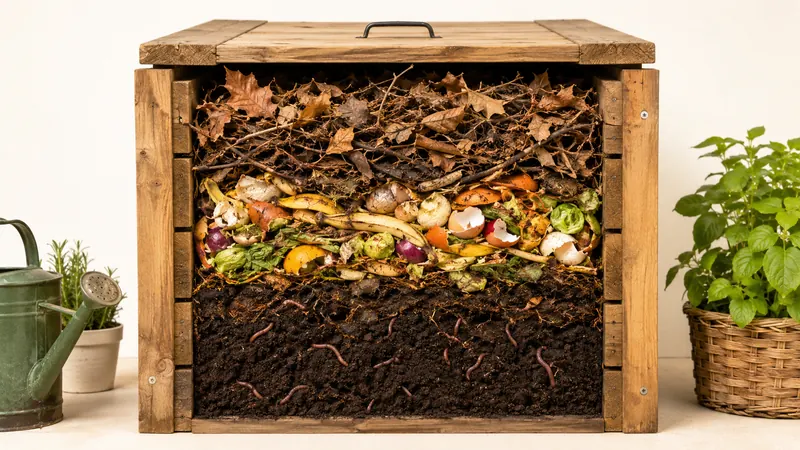
About a third of everything in your trash can is food scraps, coffee grounds, eggshells, and yard waste. All of it can be composted instead of sent to a landfill — and you don't need a yard, a worm farm, or any special equipment to start.
This guide covers three ways to compost, what goes in and what doesn't, and how to fix common problems. The cheapest method costs nothing.
Why Bother Composting?
When food scraps end up in a landfill, they're buried under layers of trash without oxygen. Instead of decomposing normally, they rot anaerobically and produce methane — a greenhouse gas roughly 80 times more potent than CO₂ over a 20-year window. About 8% of global greenhouse emissions come from food waste in landfills.
Composting breaks food down aerobically (with oxygen), which produces CO₂ instead of methane — a massive difference. The finished product is rich soil that can feed your garden, your houseplants, or your neighbor's yard.
💡 The short version
Composting diverts 30% of your household trash, reduces methane emissions, creates free fertilizer, and costs nothing to start. A bucket under the sink is enough.
Three Ways to Compost
Pick the one that fits your living situation. They all work.
🪣 Method 1: Countertop Bucket Free
Best for: apartments, condos, anyone without a yard.
Use any container with a lid — a plastic tub, a mixing bowl with a plate on top, an old ice cream container. Collect food scraps during the week, then either freeze them until trash day (to avoid smell), drop them at a municipal compost site, or give them to a neighbor who composts.
Many cities now offer free curbside compost pickup. Search "[your city] compost pickup" to check. If your city has it, this is the easiest method — they give you the bin and pick it up weekly.
Cost: $0. You already own a container.
🏡 Method 2: Outdoor Bin or Tumbler $0–$150
Best for: houses, townhomes, anyone with a small yard or patio.
A compost bin sits directly on soil and lets worms and microbes enter from below. A tumbler sits on a stand and you crank it to turn. Both work well.
The free version: pile food scraps in a corner of your yard and cover with leaves. Seriously — that's composting. A dedicated bin just keeps it tidier and speeds the process up.
The golden ratio is 3 parts "brown" (dry leaves, cardboard, newspaper) to 1 part "green" (food scraps, grass clippings). Too much green and it gets slimy. Too much brown and nothing happens. Keep it as damp as a wrung-out sponge and turn it every week or two.
Cost: Free (just a pile) to $150 (tumbler).
🏙️ Method 3: Community / Municipal Free
Best for: anyone who doesn't want to manage a bin themselves.
Over 400 US cities offer curbside compost collection. Many more have drop-off sites at farmers markets, community gardens, or transfer stations. You collect scraps at home and drop them off — they handle the rest.
Search "[your city] compost drop off" or check your city's waste management website. Some programs even give you free finished compost to pick up in the spring.
Cost: Free in most cities that offer it.
What Can and Can't Be Composted
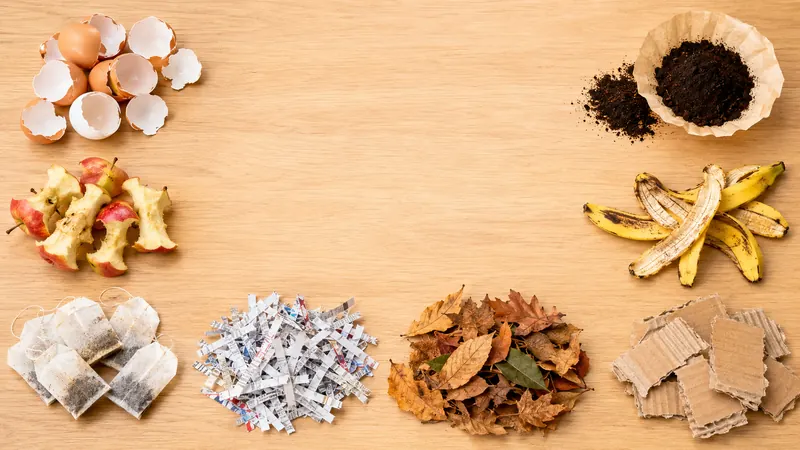
The basic rule: if it grew, it goes. If it was processed with oils, chemicals, or it came from an animal (meat, dairy), it doesn't. Print this and stick it on your fridge.
✅ Compost This
Breaks down naturally, feeds your soil.
- 🍎 Fruit scraps & peels — banana, apple, citrus, melon
- 🥕 Vegetable trimmings — onion skins, carrot tops, potato peels
- 🥚 Eggshells — crush for faster breakdown
- ☕ Coffee grounds & paper filters — excellent nitrogen source
- 🍵 Tea bags — remove staple; skip if plastic-lined
- 🍞 Stale bread, pasta, rice — small amounts, bury in center
- 🥜 Nut shells — except walnut (toxic to some plants)
- 🌽 Corn cobs & husks — chop cobs for faster breakdown
- 🍃 Dry leaves & yard trimmings — the best "brown" material
- 🌿 Grass clippings — mix with browns to avoid slime
- 📰 Newspaper & plain cardboard — shred it; no glossy print
- 🧻 Paper towels & napkins — food only, not chemicals
- 🪵 Sawdust & wood chips — untreated wood only
- 💐 Dead flowers & houseplants — remove plastic pots
- 💇 Hair & fur — human or pet, it's nitrogen
🚫 Skip This
Attracts pests, smells, or contaminates soil.
- 🥩 Meat, fish & bones — attracts rats, terrible smell
- 🧀 Dairy products — same pest problem
- 🍳 Cooking oils & grease — coats material, blocks air
- 🐕 Dog & cat waste — harmful pathogens
- 🌳 Treated or painted wood — chemicals leach in
- 🏷️ Produce stickers — they're plastic, peel them off
- 🧴 "Compostable" plastics — need industrial temps
- 🥀 Diseased plants — disease survives, spreads
- 🌰 Walnut shells & leaves — juglone is toxic to many plants
- 🧹 Dryer lint (synthetic clothes) — it's microplastic
- 🪨 Coal or charcoal ash — sulfur and heavy metals
- 📬 Glossy paper & receipts — coated; receipts have BPA
- 🚬 Cigarette butts — plastic filter + chemicals
How Long Does Composting Take?
It depends on your method and how actively you manage it.
Hot composting (actively turned, correct ratio, right moisture): 1–3 months. This is a tumbler or a well-managed bin.
Cold composting (toss stuff in a pile and wait): 6–12 months. Less effort, same result, just slower.
Municipal pickup: They handle it. You just collect scraps and set them out.
You'll know compost is finished when it looks like dark, crumbly soil and smells earthy — like a forest floor after rain, not like garbage.
Troubleshooting
Every problem has a simple fix. Composting is very forgiving.
😷 It smells bad
Cause: Too many "greens" (food scraps) without enough "browns" (leaves, cardboard). The pile is going anaerobic.
Fix: Add a thick layer of shredded cardboard or dry leaves on top. Turn the pile to introduce air. The smell stops within a day or two.
🪰 Fruit flies
Cause: Food scraps are exposed on the surface.
Fix: Always bury new food scraps under a layer of browns. Keep a bag of dry leaves next to your bin and toss a handful on top every time you add scraps. Indoors, freeze scraps instead.
🐌 Nothing is breaking down
Cause: Too dry, or pieces are too large.
Fix: Add water until the pile is damp like a wrung-out sponge. Chop large items into smaller pieces. Turn the pile to mix everything together.
🐀 Attracting pests
Cause: Meat, dairy, or oils in the pile — or food scraps left exposed.
Fix: Never add meat, dairy, or oily food. Always bury scraps under browns. If using an open pile, switch to a closed bin with a lid.
💧 It's slimy and wet
Cause: Way too many greens, not enough browns.
Fix: Add a generous amount of shredded cardboard, newspaper, or dry leaves. Turn the pile. Stop adding food scraps until the balance corrects.
The Apartment Shortcut
If you live in an apartment and your city doesn't offer compost pickup, here's the no-excuses method:
Keep a container in your freezer. A gallon ziplock bag, an old takeout container, whatever. Toss food scraps in there. When it's full, drop it off at a community compost site, a farmers market drop-off, or give it to a friend or neighbor who gardens. Search "compost drop off near me" — you'll likely find something within a few miles.
No smell. No bugs. No mess. Five minutes a week.
🤝 Can't find a drop-off?
Post on your neighborhood's Buy Nothing group or Nextdoor: "Does anyone compost? I have food scraps I'd love to give you instead of trashing them." Gardeners will love you for it — food scraps are free fertilizer.
🌱 The "good enough" note
You don't need a perfect brown-to-green ratio. You don't need to turn it on a schedule. You don't need worms. A bucket of food scraps diverted from a landfill is a win, period. Even the laziest compost pile eventually becomes soil. Nature has been doing this for millions of years without a guide.