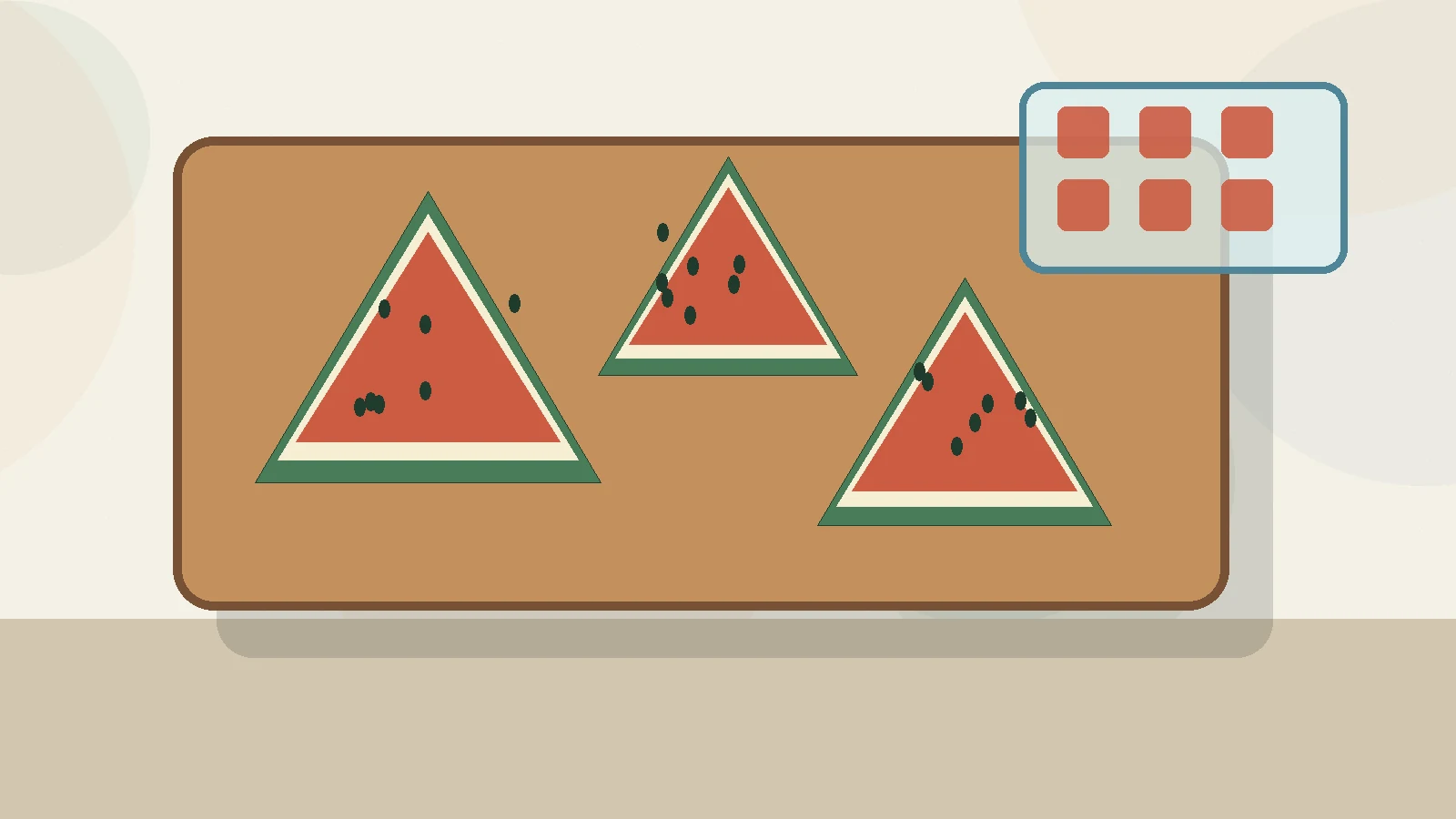
A whole watermelon looks economical in the store and slightly threatening on the counter.
The first night is easy. Everyone eats cold wedges. Then a large bowl of cubes occupies half a refrigerator shelf, slowly becoming softer while the household acts surprised that the melon is still there.
The fix is to stop treating one watermelon as one form of food. Give it three destinations the day you cut it: eat now, freeze now, and decide about the rind now.
Wash the outside before cutting
You do not eat the green skin, but the knife passes through it and then through the flesh. Rinse the whole melon under running water and scrub the surface with a clean produce brush before cutting.
Use a clean knife and cutting board. Refrigerate cut melon promptly. In hot weather, do not leave cut fruit sitting outside for hours just because it looks sturdy.
Destination one: the next 48 hours
Cut only what you realistically expect to eat over the next day or two into ready-to-grab pieces.
Visibility matters. A huge covered bowl shoved behind drinks gets forgotten. Two smaller clear containers at eye level get eaten.
Put one container in the refrigerator’s “eat me first” zone. Use the other for lunches, breakfast, or the next day’s cookout.
A squeeze of lime and a pinch of salt can revive melon that is sweet but a little flat. Mint, cucumber, feta, and watermelon also make an easy salad without requiring a recipe with fourteen ingredients.
Destination two: the freezer
Freeze the cubes you are least likely to finish fresh.
- Spread cubes on a tray or plate so they are not touching.
- Freeze until firm.
- Transfer to a bag or container.
The tray step prevents one giant watermelon brick.
Frozen watermelon will not thaw back into crisp fresh fruit. That is fine. Use it frozen in smoothies, slushes, agua fresca, or as ice cubes in sparkling water. Blend it with lime juice and a little water for a fast summer drink.
This is the same decision that saves bananas, berries, bread, and leftovers: if you are already thinking, “we probably will not finish this,” freeze it today rather than confirming the prediction three days later.
Destination three: the rind
The white portion between the pink flesh and green skin is edible. It is crisp, mild, and closer to cucumber than watermelon.
You have three reasonable options.
Option A: quick-pickle it
Peel away the hard green skin. Cut the white rind into small strips or cubes. Cover it with a hot mixture of equal parts vinegar and water, plus salt and a little sugar. Add peppercorns, ginger, chili, or mustard seed if you have them.
Cool it, refrigerate it, and start tasting the next day. Keep it refrigerated and use clean utensils.
Option B: cook it like a vegetable
Thin rind strips can go into a stir-fry, slaw, or curry. Because the flavor is mild, it takes on the sauce around it.
Do this only if you are genuinely curious. Turning food scraps into an ambitious recipe nobody wants is still a form of waste.
Option C: compost it
If the rind recipe sounds like a chore, compost the rind. Apartment composting can be as simple as freezer storage and a drop-off.
Composting is not “using every part,” but it does return the organic material to soil instead of asking a landfill to preserve it without oxygen.
Do not buy ingredients to rescue one ingredient
The internet can turn watermelon rescue into a shopping list: special jars, fresh herbs, exotic spices, a high-powered blender, and a dehydrator.
Use what you already have. The greenest plan is not the recipe with the most complete use of the melon. It is the plan you will actually finish.
That is why ten-minute meal planning works: it connects food to specific meals before the refrigerator becomes long-term storage.
A one-melon schedule
Cutting day: Eat wedges. Refrigerate two days’ worth. Freeze the obvious excess.
Day two: Add cubes to breakfast or lunch. Make a salad or cold drink.
Day three: Freeze anything still untouched. Pickle the rind or send it to compost.
The schedule is not strict. It is simply faster than waiting for texture and smell to make the decision for you.
Good enough, not perfect
Eat the pink part. Freeze the excess while it is still good. Try the rind once if that sounds fun. Compost it if it does not. A watermelon does not need to become a zero-waste lifestyle test before it can become lunch.