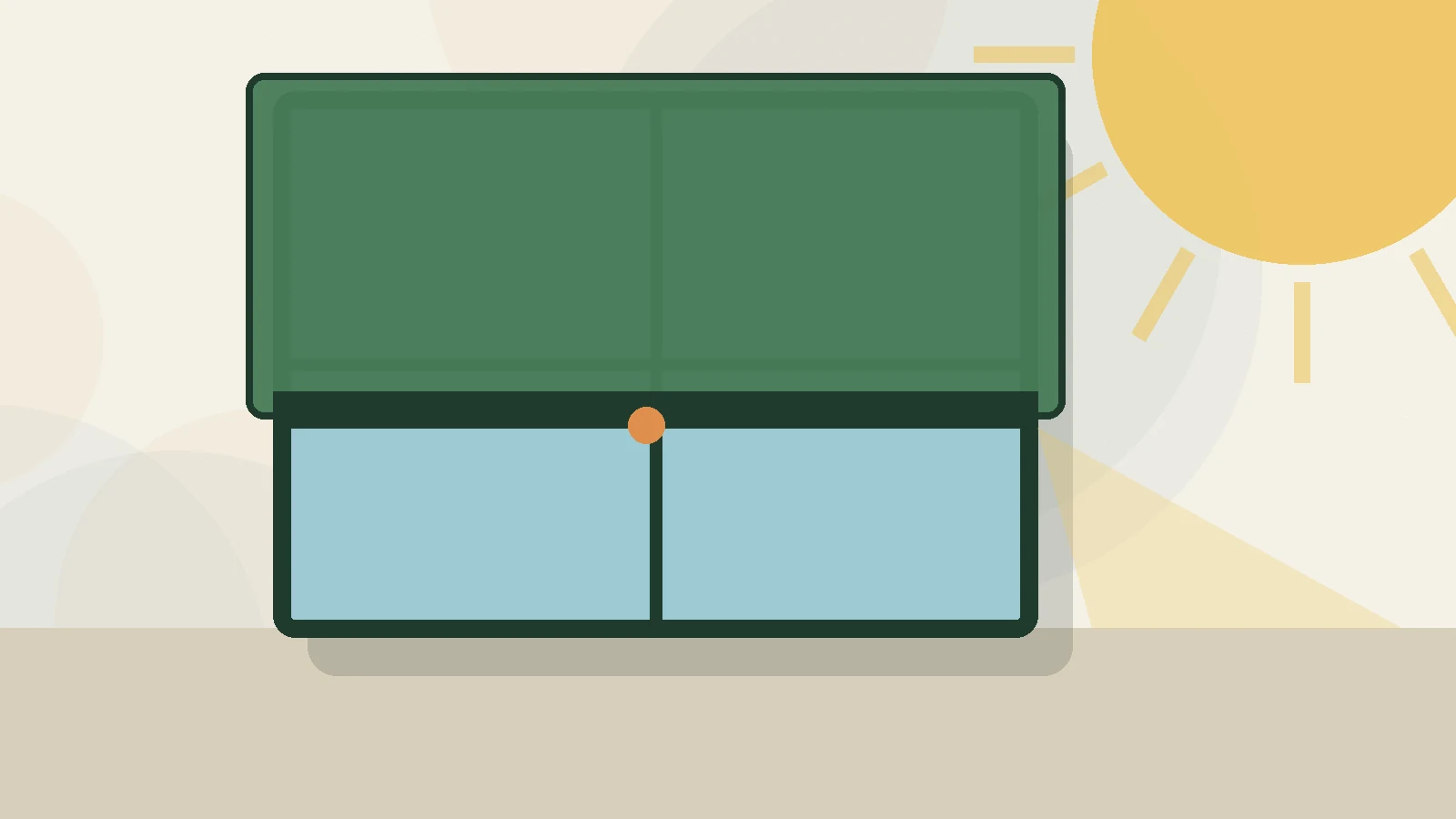
Most summer cooling advice starts with the thermostat. The cheaper place to start is the window.
Sunlight passing through glass becomes heat inside the room. Once the floor, couch, countertop, and walls have warmed up, they keep releasing that heat back into the space. Closing the blinds at 4 p.m. may reduce glare, but by then the room has already stored hours of solar heat.
The useful habit is not simply “close the blinds.” It is shade the glass before direct sun reaches it.
Find the two windows doing most of the damage
You do not need to darken the whole house. Walk through your home between noon and late afternoon and look for:
- A bright rectangle of sun moving across the floor
- A couch or bed that feels warm to the touch
- A room that is consistently hotter than the rest of the home
- West-facing windows that take the full afternoon sun
- South-facing glass with little exterior shade
Those are your priority windows. Start there.
The simple summer schedule
In many homes, this works:
Morning: Open shades where the sun is not hitting directly. Use the daylight.
Before direct sun arrives: Close the shade, curtain, or blind on the hot windows.
After the sun moves away: Reopen them if the outdoor air and view are worth it.
After sunset: Open windows only when the air outside is cooler and less humid than the air inside.
The exact clock time depends on your home. A west-facing apartment may need the blinds closed from 1 p.m. until sunset. An east-facing bedroom may need shade only through late morning.
Use what is already hanging there
You do not need to buy “thermal” curtains to start. Existing blinds, curtains, a roller shade, or even a light-colored fabric panel can reduce the direct sun reaching the room.
A few details make ordinary coverings work better:
- Close them near the glass, not halfway across the room.
- Use a light or reflective side facing the window when possible.
- Cover the full bright area, including the lower part of the glass.
- Keep curtains away from floor vents so you do not trap conditioned air behind them.
If you rent, removable tension rods, temporary paper shades, and static-cling solar film can help without drilling. Check lease rules before applying film because some glass manufacturers restrict certain products on insulated windows.
Exterior shade works even better
An awning, porch, tree, balcony above, or exterior shutter stops sunlight before it passes through the glass. That is generally more effective than dealing with the heat after it is already inside.
But do not turn “best” into “nothing.” Interior shades you already own are still useful, immediate, and free.
Pair shade with moving air
Once you have reduced the incoming heat, use a fan in the room you are occupying. Ceiling fans cool people, not rooms, so turn the fan off when you leave.
Then let the thermostat do its actual job. Do not set it to 60°F hoping the house will cool faster. Your AC runs at the same basic pace either way; the lower setting mainly tells it to keep running longer.
What not to do
Do not seal yourself into a dangerously hot room to save electricity. Window shading is a comfort and efficiency tactic, not a substitute for safe cooling during extreme heat.
Older adults, babies, people taking certain medications, and people with heart, lung, or mobility conditions can be more vulnerable to heat. Use air conditioning, a cooling center, or another safe location when indoor temperatures become unsafe.
The one-week experiment
For seven days, pick the hottest room and close its shade before the sun hits. Leave the rest of your routine alone.
You are not trying to produce a laboratory result. You are checking whether the room feels less punishing at the same thermostat setting. Most people notice the difference without buying anything.
Good enough, not perfect
Shade the one or two windows that bake the house. Do it before the heat arrives. Combine that with a fan where people are sitting. You do not need a smart-home system to stop volunteering your living room as a greenhouse.